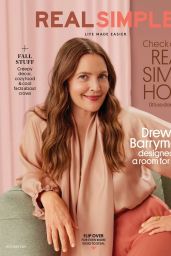
Drew Barrymore doesn’t just grace the cover of Real Simple—she embodies its ethos, swathed in blush tones and a smile that says, “Yes, life can be pretty—and practical.”
There’s something quietly revolutionary about Drew Barrymore’s Real Simple cover. It’s not the boldness of a red carpet gown or the drama of a high-fashion editorial, but the effortless authority of a woman who has mastered the art of making comfort look like a power move. In a world obsessed with excess, Barrymore’s October 2025 spread is a masterclass in the beauty of simplicity—both in style and in spirit.
Barrymore’s look is a symphony of softness: a draped blush-pink blouse (its relaxed fit and rolled sleeves evoking a sense of approachable elegance), paired with tailored trousers in a complementary coral hue. The palette is warm, inviting—like a sunset over Malibu, or the glow of a well-loved home. Her hair, loose and tousled, frames her face with an “I woke up like this” ease, while her makeup—rosy cheeks, a swipe of mascara, and a nude lip—enhances rather than obscures.
The setting is equally understated yet intentional. A muted pink backdrop and a cozy armchair suggest a space designed for living, not just for show. It’s a visual manifesto for her “feel-good room” assignment inside the magazine: a sanctuary where functionality meets warmth, and every detail feels like a hug.
Accessories are minimal but meaningful: a simple gold ring, the kind that doesn’t scream for attention but whispers of timelessness. Even the typography—playful yet polished—mirrors her aesthetic: unpretentious, but never unconsidered.
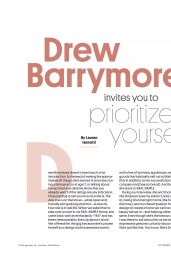
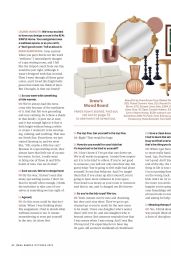
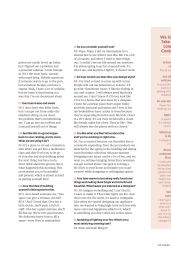
The embedded text reveals Barrymore’s role not just as a cover star, but as a collaborator. She’s designed a room for Real Simple readers, a “wellness space” that’s less about spa-like minimalism and more about lived-in comfort. Her interview snippets—“prioritize yourself,” “be kind to yourself,” “therapy is functioning”—hint at a philosophy that’s as much about mental well-being as it is about interior design. The magazine’s tagline, “Life Made Easier,” feels like a mission statement, and Barrymore, with her signature blend of vulnerability and wit, is its perfect ambassador.
Her confession about being a “hoarder” who craves a “layered look” humanizes the spread. This isn’t aspirational in the untouchable sense; it’s aspirational in the “I could actually do this” sense. The mood board of her curated items—a ribbed wood lamp, a striped linen sofa, a $7 vase—reinforces the idea that style doesn’t require a fortune, just intention.
Barrymore’s Real Simple moment arrives at a cultural crossroads where self-care and authenticity are currency. In an era of curated Instagram feeds and unattainable lifestyle goals, her embrace of “pretty” over “perfect” feels like a breath of fresh air. The shoot’s aesthetic—soft, lived-in, and joyful—aligns with a growing movement toward “quiet luxury,” where the value lies in the story behind the objects, not their price tags.
Her influence extends beyond the page. As a founder of her own home goods line and a vocal advocate for mental health, Barrymore represents a new kind of celebrity: one who champions accessibility, honesty, and the radical notion that you don’t have to sacrifice comfort for style. The fact that she’s photographed in her own designs (and admits to sitting on the bed in her clothes) only deepens the connection. It’s a reminder that the most compelling narratives aren’t about perfection, but about personality.
The styling choices—from her rumpled blouse to the “five-second rule” debate in her interview—paint a portrait of a woman who’s as relatable as she is iconic. Her hair and makeup mirror the room she’s designed: polished but not fussy, put-together but not rigid. Even her controversial takes (no socks in bed, toilet paper over not under) feel like an extension of her sartorial philosophy: rules are meant to be bent if it makes life a little happier.
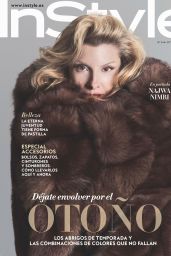
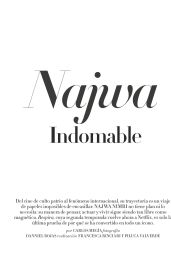
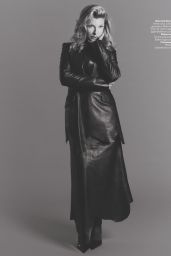
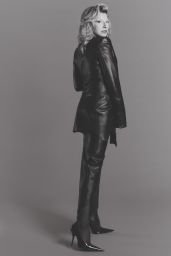
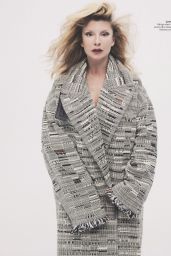
Wrapped in fur and framed as “indomable,” Najwa Nimri’s InStyle España cover fuses high fashion with cultural defiance — autumn as both armor and allure.
There’s a reason Najwa Nimri commands a cover the way few others can. On InStyle España’s October 2025 issue, she appears swathed in a dark brown fur coat — a garment less about warmth than about presence. The silhouette is cocoon-like, erasing the body’s contours and forcing the gaze upward, to her face, her eyes, her refusal to be softened.
The embedded text does the work of framing: “Déjate envolver por el OTOÑO” — an invitation to let autumn wrap around you, just as the coat does. Yet the accompanying profile headline, “Indomable” (“Untamable”), pushes back against the softness. It reminds us that Nimri has built her career on resisting categorization, from cult Spanish cinema to international streaming phenomena.
Visually, the cover is a study in contrasts: the plush tactility of fur against the sharpness of her gaze; the enveloping silhouette against the precision of her hair and makeup. It’s autumn as metaphor — protective, yes, but also a little dangerous.
This is not just a fashion spread. It’s a cultural positioning: Nimri as both muse and disruptor, embodying the season’s coats not as trend but as statement.
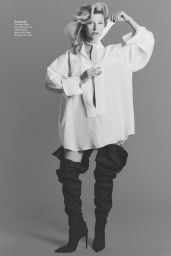
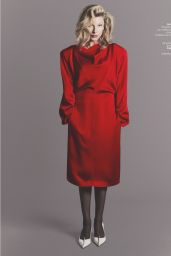
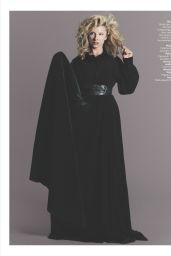
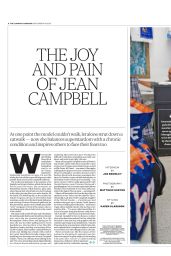
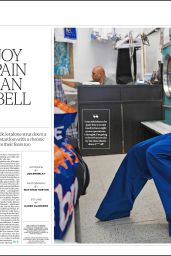
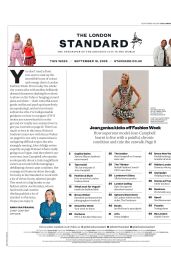
Jean Campbell’s LFW debut fuses plush red velvet roses with raw urban grit—proving fashion’s power to elevate even the most intimate battles.
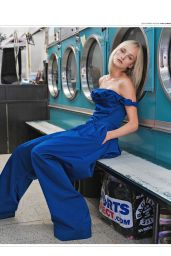
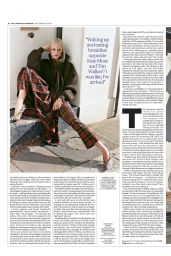
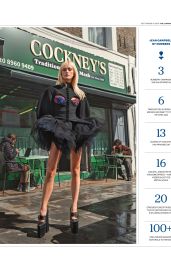
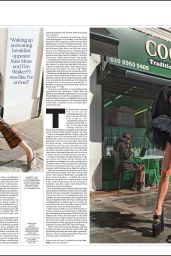
The cover image hits like a sartorial gut punch: a form-fitting crimson gown, its shoulders blooming with oversized velvet roses, set against a backdrop of London’s brutalist architecture. The dress clings to her frame, the roses’ plush texture contrasting with the city’s hard lines—like a love letter to chaos and control. Below, in the feature spread, she swaps glamour for grit: wide-leg tartan trousers, a slouchy knit sweater, and striped heels, lounging against a wall as if the world’s weight rests easy on her shoulders. Embedded text teases her journey: “Waking up and eating breakfast opposite Kate Moss and Tim Walker? I was like, I’ve arrived.” It’s a quiet flex, but one that underscores fashion’s ability to turn pain into power—she’s not just wearing clothes; she’s wearing her story. The article’s focus on her chronic pain (and how she balances it with superstardom) ties to a cultural shift: models不再是 silent muses, but advocates, using their platforms to normalize vulnerability. Her styling feels intentional: sleek blonde hair frames a face that’s equal parts soft and steely, makeup minimal enough to let the clothes (and her spirit) take center stage. The contrast between the cover’s dramatic red and the spread’s laid-back plaid mirrors her duality—glamorous yet grounded, fragile yet fierce.