Elle Fanning solidified her status as a Coach muse, transforming a literal runway look into an effortlessly cool, ’90s-inspired double-denim fantasy on the streets of New York.
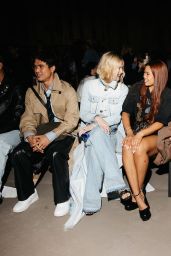
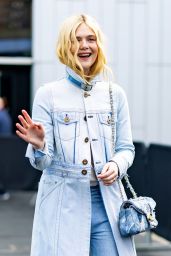
Elle Fanning attended the Coach show during New York Fashion Week, making a compelling case for the enduring power of denim. Her look, originally presented as part of Coach’s Resort 2026 collection, was a masterclass in styling. She wore a striking, floor-length trench coat made of a light-wash denim. Unlike the runway’s unbuttoned presentation, Fanning fastened the coat’s storm collar at her neck, allowing the rest of the coat to flow behind her like a cape as she walked. This simple styling choice created a dramatic, almost regal silhouette, lending an unexpected elegance to the rugged material. Beneath the coat, she revealed a simple white top and a pair of equally light-wash, baggy jeans with wide, exaggerated hems that pooled around her ankles, creating a cohesive, head-to-toe denim ensemble.
She carried a patched denim Tabby crossbody bag, a playful nod to the brand’s iconic logo and the overall patchwork aesthetic of the look. The bag, with its metallic chain strap, added a touch of polish and contrasted beautifully with the casual, distressed feel of the outfit. Fanning’s hair was styled in a slightly messy, natural blonde look, and her makeup was kept fresh and clean, allowing the bold, monochromatic outfit to take center stage. The result was a look that felt both nostalgic and utterly modern, a perfect example of contemporary street style.
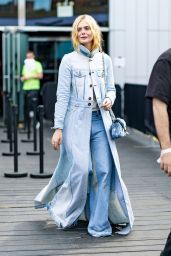
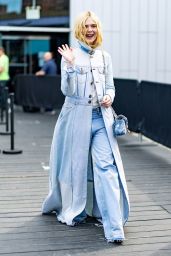
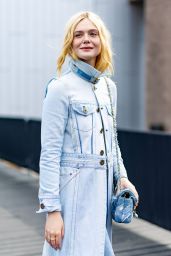
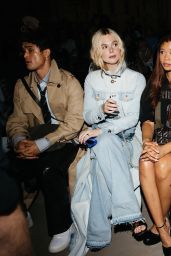
The look wasn’t just a fashion statement; it was a revival of an era, a modern-day grunge aesthetic stripped of its angst and injected with a cool, downtown New York sensibility. By trading the original collection’s whimsical, fairytale-like props for her own sleek styling, Fanning and her stylist, Samantha McMillen, showed how to authentically translate runway theatricality into a real-world look. The whole ensemble felt like a tribute to the ’90s without being a costume, a testament to how the right pieces can transcend trends and become a part of a larger, evolving story in celebrity style.
The rest of the fashion pack, including GloRilla, also embraced the denim dress code, proving that the all-jeans look is having a major moment. It begs the question: is Fanning leading a new denim revolution, or is she simply proving that a classic never truly goes out of fashion? Either way, she has cemented her place as a go-to for inspiring looks and a popular celebrity to watch. You can check out more amazing celebrity street style here .
At Astra West’s 2002 launch, Ryan pairs a gauzy crimson blouse with pinstripe polish—proof that early‑aughts red carpet style could be both relaxed and razor‑sharp.
Jeri Ryan’s arrival at the Astra West Grand Opening in West Hollywood, July 2002, is a masterclass in how the early aughts balanced glamour with ease. The sheer, red‑patterned blouse—light as air yet saturated in tone—floats over the frame, its floral motif catching the flashbulbs without overwhelming the eye. The button‑front cut and relaxed collar keep it approachable, while the translucence adds a whisper of allure.
Anchoring the look, black pinstriped trousers bring a tailored counterpoint, their vertical lines elongating the silhouette and grounding the blouse’s softness. The pairing feels deliberate: a conversation between boardroom precision and after‑hours ease. Black shoes maintain the clean line, while a large red handbag—embellished with white stitching and decorative accents—injects a playful, almost bohemian punctuation mark into the ensemble.
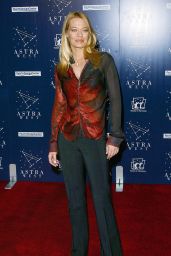
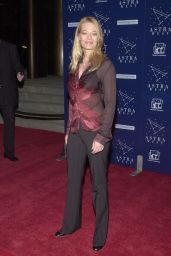
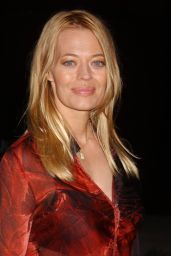
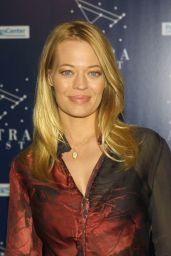
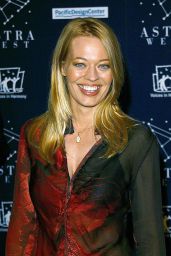
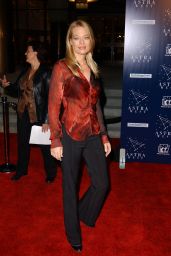
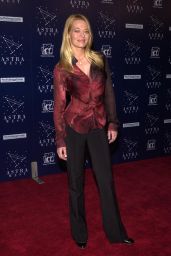
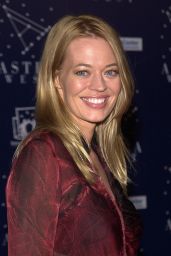
Her stance is open and assured, shoulders relaxed, chin lifted just enough to meet the cameras without strain. The setting—a nighttime red carpet framed by steps and a building entrance—adds to the sense of occasion, but Ryan’s styling resists the era’s more maximalist impulses. Instead, she leans into a look that could walk off the carpet and into a dinner reservation without missing a beat.
Culturally, this moment sits at the intersection of two defining trends of the time: the sheer blouse revival that carried over from the late ’90s and the pinstripe’s migration from corporate uniform to fashion statement. It’s a reminder that the early 2000s weren’t all low‑rise denim and rhinestones—there was a parallel current of understated, grown‑up chic.
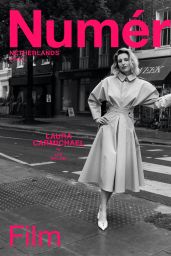
For Numéro Netherlands, Carmichael leans into cinematic restraint—rain-slick streets, razor tailoring, and a gilded waist (because restraint loves one good flourish).
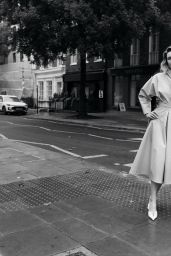
Laura Carmichael meets the lens like a quiet siren—no shout, all signal. On the “Film” cover, she anchors a rain-darkened street in a long-sleeved, belted dress with a flared skirt and pointed heels, one hand hooked to a streetlamp as if calling the scene to order. The black-and-white palette sharpens the line: trench-adjacent structure up top, swing and movement below, the stance set to “cut—print.”
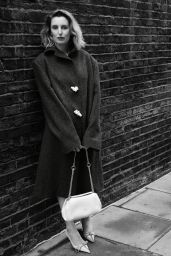
Shift scenes and color bleeds in. Against a black-painted facade, Carmichael wears a deep green satin blouse with voluminous sleeves and a cinched waist, the look clinched by an ornate gold buckle that reads baroque punctuation. Wide-leg teal trousers drop with studio-perfect weight; pointed brown shoes extend the silhouette with that sly, lengthening finish. The palette? Jewel tones without the noise—inked, urbane, unhurried.
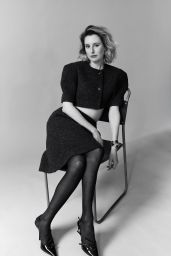
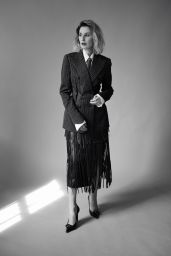
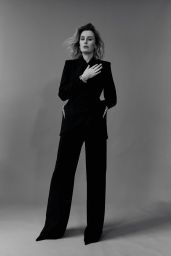
Back in the studio, the narrative goes vertical. A pinstripe double-breasted blazer with structured shoulders sits over a crisp shirt and tie, but the twist lands below: a skirt cut into long, swaying strips, turning stride into motion graphics. The pointed heels restore severity; wavy hair softens the line—precision drafting meets after-hours fringe. It’s boardroom codes rewritten for a dolly shot.
Accessories stay sparse and strategic: the statement belt buckle in look two carries the visual thesis, while the cover’s minimalism relies on architecture and attitude. Lighting does the heavy lifting—overcast city gloss for the opener, soft window-sheen for the green-and-teal vignette, high-contrast studio chiaroscuro for the pinstripe—and Carmichael calibrates her posture to each: grounded and cinematic; louche and leaning; erect, almost editorially still.
What does it all reference? Film noir’s urban choreography and midcentury tailoring, trimmed with a hint of ’70s gloss and ’90s minimalism. Think streetlamp as co-star, trench codes distilled, and fringe-as-motion blur—a suite of frames rather than outfits. Hair and makeup keep tempo: softly waved lengths and clean, camera-minded detailing that appears designed to respect line and shape rather than steal focus.
If this is Carmichael’s fall mood board, consider us cast—though we’ll allow for one reshoot if that fringe skirt gets a sequel on a real sidewalk.
Explore more looks shaping the season in our curated hub for celebrity photos .
