In a quietly magnetic September 2025 portrait, Georgina Amorós and Susana Abaitua lean into monochrome minimalism—where fashion restraint meets cinematic intimacy.
There’s a kind of hush in the Vanity Fair España September 2025 spread—an editorial silence that speaks volumes. Georgina Amorós and Susana Abaitua, joined by two sharply dressed male counterparts, deliver a masterclass in tonal cohesion and emotional proximity. It’s not loud. It doesn’t need to be.
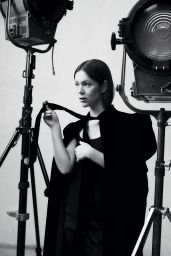
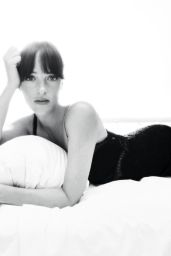

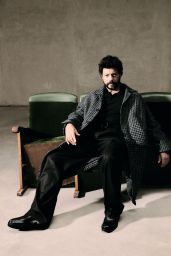
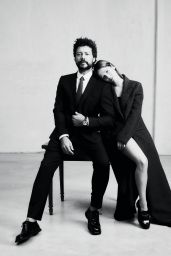


The image, rendered in black and white, strips away distraction and leaves only the essentials: silhouette, texture, and mood. Amorós and Abaitua wear dark, tailored coats—structured but not stiff, with clean lines that suggest quiet authority. The fabric appears matte, absorbing light rather than reflecting it, which adds to the overall sense of intimacy. There’s no embellishment, no visible branding—just form and presence.
For more moments like this—where style meets storytelling—explore our curated archive of celebrity photos .
Tina Knowles brought breezy refinement to Flushing’s blue carpet—lace-on-lace, monochrome magic, and a silhouette that whispered “tennis, but make it couture.”
There’s something quietly commanding about Tina Knowles’ appearance at the 2025 US Open in Flushing, NY. While the event itself may center on athletic prowess, Knowles turned the blue carpet into a runway moment—one that fused sport-adjacent ease with high-fashion precision.
Outfit first. The ensemble: a crisp white button-up top paired with wide-legged trousers, both rendered in semi-sheer floral lace. It’s a monochrome look, yes, but far from minimal. The lace adds texture and depth, catching light in a way that feels both romantic and modern. The silhouette is relaxed yet tailored—structured shoulders, fluid pant legs, and a hem that grazes the floor with just enough drama.
Accessories are kept tight and tonal. A petite white handbag anchors the look, echoing the lace’s delicacy without competing for attention. No visible jewelry, no flashy embellishments—just a clean, cohesive palette that lets the fabric do the talking.
The overall mood? Effortless sophistication. It’s the kind of look that nods to the tennis whites of yesteryear but updates them with a fashion-forward twist. Think Wimbledon meets Paris Fashion Week.
And while Knowles may not dominate headlines like her daughters, her sartorial choices consistently land her among the quietly influential figures in celebrity fashion .
So, was this a style serve worthy of match point—or just Tina reminding us that elegance doesn’t need a scoreboard? Either way, she walked off the blue carpet like a champion.
Monica Bellucci channels maximalist fantasy in a 2013 S Moda shoot—think baroque excess, modern polish, and a dash of theatrical defiance.
There’s something deliciously defiant about Monica Bellucci’s 2013 editorial for S Moda. In an era when minimalism reigned supreme, Bellucci leaned into opulence—no apologies, no restraint. The result? A visual feast that feels like a Renaissance painting reimagined for the pages of a high-gloss fashion tome.
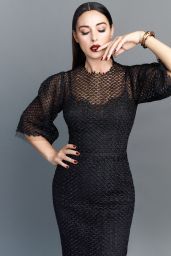
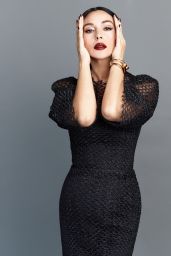
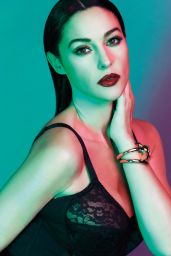
Let’s start with the first look: a kaleidoscope of color and pattern that could’ve easily tipped into costume territory—but didn’t. The puffed sleeves, ornate motifs, and saturated palette (reds, greens, purples, golds) evoke baroque grandeur, yet the silhouette remains modern and wearable. It’s a masterclass in balance: theatrical but not overwrought, regal yet grounded.
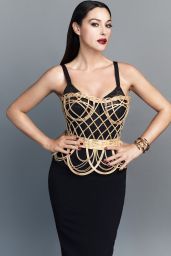
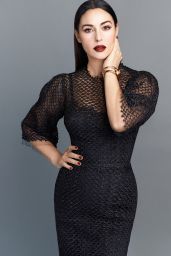
Then comes the second ensemble—a black sheath dress overlaid with a golden lattice structure that reads part armor, part sculpture. The woven texture recalls traditional rattan techniques, but the execution is pure high fashion. It’s as if Bellucci stepped out of a Klimt painting and into a Helmut Newton frame.
Accessories are kept sharp and intentional. Gold bangles stack along her wrist, echoing the metallic overlay without competing for attention. No earrings, no necklace—just the bold geometry of the garment and the quiet confidence of someone who knows exactly how much is enough.
Her pose? Controlled elegance. One hand on the hip, the other grazing her neck—classic portraiture meets editorial edge. The lighting is neutral, almost stark, allowing the garments to speak without distraction.
Hair and makeup seal the mood: long, straight locks parted cleanly down the middle, paired with bold red lips and defined brows. It’s a look that nods to Old Hollywood but lands firmly in the now. The styling cohesion is airtight—every element, from the garments to the gaze, contributes to a narrative of timeless power.
And while Bellucci’s red carpet appearances often lean toward sultry sophistication, this shoot reveals a more experimental side—one that still fits seamlessly within the broader spectrum of celebrity style .
So, is this editorial a love letter to baroque excess—or a quiet rebellion against fashion’s fleeting trends? Either way, Bellucci proves that true style isn’t about following rules. It’s about rewriting them.
