Gwyneth Paltrow steps out at Milan Fashion Week in a head-to-toe monogram, trading quiet luxury for a statement in house codes.
The look is an archival echo, a deliberate nod to a moment in fashion history when opulence was not only accepted but celebrated. Gwyneth Paltrow, often a purveyor of understated elegance, arrives in a full Gucci ensemble that is an overt embrace of loud luxury. The outfit is a masterclass in maximalism: a bow-tied blouse, an A-line skirt, and knee-high boots—all rendered in the interlocking GG motif. The color palette of beige and camel keeps the look grounded despite the overwhelming repetition of the pattern, creating a sophisticated uniformity that feels both retro and current.
The supplied text confirms the strategic nature of this outfit. It’s a direct reference to Demna’s first archetypes for the house, linking back to founder Guccio Gucci’s origins as a luggage maker. This isn’t just an outfit; it’s a conversation about brand heritage and the power of a single, iconic print. The look intentionally contrasts Paltrow’s recent minimalist choices, signaling a shift in her style and aligning her with a new fashion narrative. It’s a statement that begs the question: is Gucci’s bold print a new direction for celebrity style, or a powerful one-off for the front row?


On a crisp September morning, Scarlett Johansson didn’t just step into CBS Mornings—she commanded it, blending director’s gravitas with a side part so bold, it felt like a cultural manifesto.
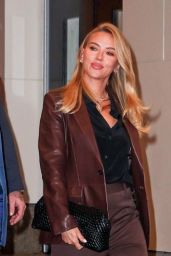
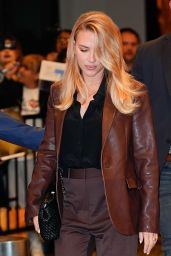
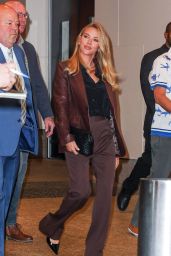
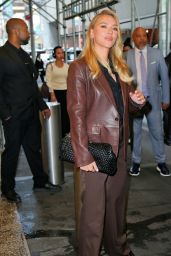
Scarlett Johansson’s appearance on CBS Mornings on September 23, 2025, was a masterclass in modern tailoring and intentional styling. The actress and director, promoting her feature debut Eleanor the Great , embraced a palette of deep neutrals: a chocolate-brown leather blazer draped over a black button-up blouse, paired with wide-leg trousers in the same rich brown. The ensemble was anchored by glossy black patent stilettos, their pointed toes and slim heels peeking out with every step—a nod to the season’s patent pump revival, as seen on Reese Witherspoon and Ciara in recent weeks.
Her accessories were minimal but impactful: a Dune London Encourage Black Woven Clutch, its intricate weave adding texture to the monochrome layers, and hoop earrings that framed her face without competing for attention. But it was Johansson’s hair—a voluminous, honey-blonde side part à la Jessica Rabbit—that stole the show. The style, both divisive and nostalgic, evoked the Indie Sleaze era’s audacity, yet felt refreshingly modern in its execution.
The embedded text and imagery suggest a deliberate tension between professionalism and playfulness. Johansson’s outfit, crisp and businesslike, could have belonged to any boardroom. Yet, the extreme side part and the glossy pumps injected a dose of irreverence, a reminder that even the most polished looks can—and should—carry a spark of the unexpected. The Dune London clutch, with its woven detail, echoed the intrecciato leather trend, subtly tying the look to the broader fashion conversation
This moment arrives as Johansson’s star power extends beyond acting. Her directorial debut, Eleanor the Great , premiered at Cannes and is set for wide release on September 26, 2025 . The film, a poignant exploration of grief and connection, mirrors the duality of her CBS Mornings look: serious in structure, but alive with emotional resonance. Meanwhile, her collaboration with Yorgos Lanthimos on Prada’s surreal “Ritual Identities” campaign further cements her status as a cultural polymath, blending fashion, film, and avant-garde storytelling.

In Vanity Fair’s October 2025 issue, Lea Michele turns a chessboard into a fashion battleground — red trench dress, strategic poise, and a gaze that plays to win.
There’s no mistaking the power move here: Lea Michele, standing in a scarlet trench-style dress, flanked by a chessboard and a shadowed opponent. The game isn’t just on — it’s already hers.
The trench dress is a masterstroke. Belted at the waist, double-breasted, and tailored to precision, it evokes both military command and cinematic drama. The red is bold, unapologetic — a color that doesn’t ask for attention, it demands it. The seated figure behind her, dressed in an oversized grey blazer and black shirt, offers contrast and context: this isn’t just fashion, it’s narrative.
The word “Gambit” anchors the page — a nod to chess, yes, but also to strategy, risk, and control. It’s not just a caption, it’s a thesis. Michele isn’t styled as a player; she’s styled as the move itself. The credit to Mark Seliger confirms the visual sophistication — his lens always finds the tension beneath the polish.
