Holland Roden & Matthew Daddario ignite a new standard for styled shoot romance in their cinematic fashion spread—blending festive Holiday reds with classic tailoring for a cozy, yet polished, celebrity photoshoot.
The most effective celebrity photoshoot spreads capture not just fashion, but a feeling. This glimpse into the Holiday Touchdown: A Bills Love Story editorial instantly evokes the cinematic warmth of a classic holiday film, trading high-gloss polish for aspirational, festive style.
The Visual Breakdown features a compelling contrast. Holland Roden is draped in textures essential for winter glamour: a creamy white, high-neck, textured knit dress that features a side slit, revealing a flash of skin and red heels (or possibly ankle boots). The look is accessorized with striking red lips and bold gold cuff bracelets , adding a luxurious, festive dimension. Matthew Daddario complements her in sharp menswear, a tailored, dark navy or black suit and coat, suggesting a grounded sophistication against the holiday cheer. The overall palette is dominated by rich reds and winter whites, a conscious nod to the seasonal themes.
The Embedded Text confirms the narrative focus: “ A Bills Love Story ,” connecting the sophisticated fashion to a distinctly American, communal cultural event—football and the holidays. This coupling elevates the spread beyond typical editorial work, suggesting a relationship between high style and mainstream cultural touchstones.

The Cultural Insight is the brilliant fusion of Hallmark movie cozy aesthetics with genuine fashion spread execution. It acknowledges the appeal of accessible, romantic glamour, proving that holiday wear can be both warm and impeccably tailored. This is the definition of aspirational comfort .
Their Styling Cohesion tells a complete story. Roden’s hair is voluminous and soft, framing her face and playing off her intense red lip—classic Hollywood romance. Daddario’s polished, clean-cut look provides the necessary structure. Their Pose & Atmosphere is one of gentle intimacy, looking at each other with quiet confidence against a backdrop that suggests a snowy, nostalgic location.
When the styling is so perfectly aligned with the cinematic fantasy, can we call this a fashion editorial, or just the most stylish holiday card ever conceived?
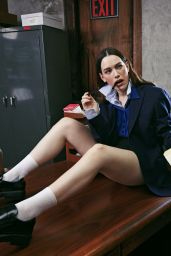
A trench coat on a desk, a blazer in fluorescent light — Victoria Pedretti’s Numéro Netherlands shoot turns officewear into high-fashion subversion.
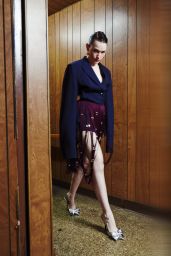
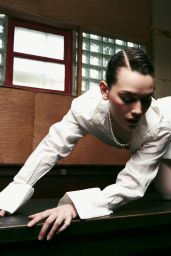
Victoria Pedretti has always thrived in liminal spaces — characters caught between fragility and ferocity. In Kolby Knight’s lens for Numéro Netherlands January 2025, that tension is translated into fashion: the office as cage, the outfit as escape.
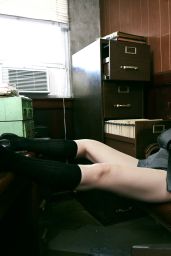
One frame shows her standing on a desk in a beige trench coat, white shirt, and tie — the uniform of authority, undone by denim and the audacity of her stance. Another finds her perched on a desk, blazer sharp, socks visible, pen in hand — a secretary’s pose reimagined as a power play.
The embedded narrative is clear: this isn’t about workwear, it’s about the absurdity of its codes. The filing cabinets, rotary phones, and fluorescent lights become props in a satire of bureaucracy. Pedretti’s gaze — direct, unflinching — makes the viewer complicit.
Culturally, the spread nods to cinematic archetypes: the investigative journalist, the corporate rebel, the femme fatale in a boardroom. Yet it also feels distinctly 2025 — a moment when fashion is interrogating the structures of labor, gender, and authority.
Hair and makeup remain understated, allowing the clothes and poses to carry the narrative. The result is high fashion that doesn’t just dress the body — it stages a critique.




Kim Kardashian commands the Vogue France October magazine cover, embodying sculptural high fashion in a dramatic patent noir ensemble (—the powerful studio portrait defines the cultural moment of fetish-infused architectural dressing).
The October 2025 cover of Vogue France is not just an image; it is a declaration of modern power. Kim Kardashian is presented in a severe, stunning studio portrait , leveraging extreme tailoring and a high-gloss finish to create a deeply compelling fashion spread .
The visual language is pure, high-contrast drama. The Outfit Focus is an intensely structured black garment—likely a jacket or sculpted top—featuring a patent leather or highly polished texture that catches the light like liquid armor. The Silhouette & Cut are highly architectural, boasting a sharp, angular neckline and exaggerated, almost shell-like shoulder or sleeve detailing. The waist is cinched into a severe corset-like form, creating an extreme hourglass shape that serves as the visual engine of the editorial .
The minimal Accessories —a single statement ring, perhaps—subtly accent the look, ensuring the focus remains on the dramatic interplay of light and texture in the clothing. The Pose & Atmosphere is intentionally severe; the direct, unsmiling gaze and the strong, three-quarter stance transform her into a sculpted piece of art, proving that control and composure are the new definition of power.
The scant Embedded Text visible on the page reinforces this idea of curated control, with the name VOGUE providing the ultimate stamp of high fashion authority. The overall mood evokes the Cultural Context of Neo-Gothic glamour—a cinematic, almost Matrix -esque vision of femininity that finds power in restraint, tailoring, and a palpable sense of glossy, dangerous texture.
Her Styling Cohesion is equally disciplined. The hair is pulled back completely, emphasizing the architectural lines of the garment and the sharp, direct focus of the shot. Her makeup is flawless but understated, allowing the natural angles of her face and the severity of the dress to carry the full weight of the beauty shot ’s drama.
When an artist uses fashion to become pure sculpture, does the garment define the woman, or does the woman define the moment?
