Kerry Condon attends the European premiere of F1: The Movie, trading her on-screen grease-stained jumpsuit for a dramatic, intricately embellished gown that fuses high fashion with a hint of racing-inspired dynamism.
For a film about speed and engineering, Kerry Condon’s choice of a Valentino gown was a surprisingly poetic one. She arrived on the red carpet not in the racing leathers her character might wear, but in a look that was all about controlled, elegant power. The dress, from Valentino’s Fall 2025 “Le Méta-Théâtre Des Intimités” collection by Alessandro Michele, is an ambitious sartorial statement that defies easy categorization.
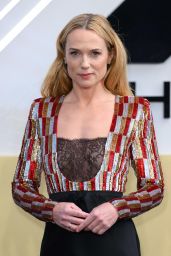
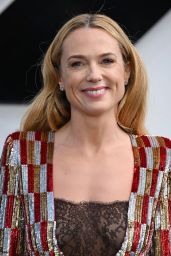
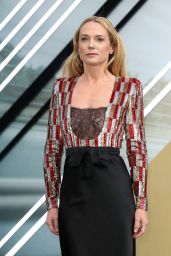
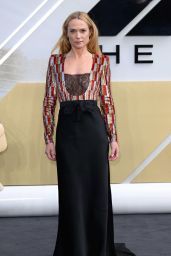
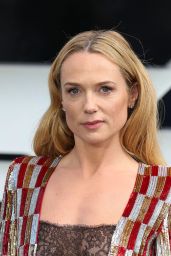
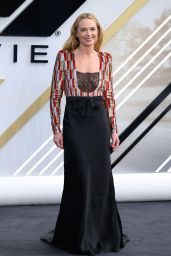
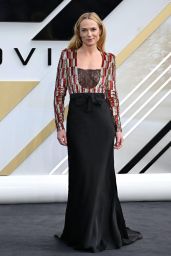
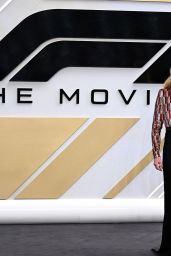
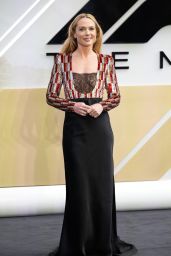
The outfit focus is a two-part construction: a shimmering, geometric bodice paired with a sweeping black silk skirt. The top is a mosaic of rich colors—deep reds, warm golds, and bright silvers—creating a striking, almost armor-like effect with its metallic embellishments. Beneath this, a sheer, lace panel provides a subtle contrast, adding a layer of delicate sensuality. The high, defined shoulders give the silhouette a bold, almost architectural feel, a stark departure from the soft fabrics of the skirt.
Lola Tung trades Hollywood’s polished glamour for a dose of downtown defiance—cropped knits, frayed hems, and a pair of heels that mean business—in NYLON’s September 2025 spread, lensed by Emily Soto. (Consider this your warning: the era of “nice girl” styling is officially over.)
There’s a moment in every young star’s career when the red carpet polish starts to feel like a cage. Lola Tung’s latest editorial for NYLON —shot by the ever-bold Emily Soto—isn’t just a photoshoot; it’s a declaration. This isn’t the ingenue we’ve seen on the Summer I Turned Pretty press tour. This is Tung stepping into the kind of celebrity style that thrives on contradiction: sweet meets subversive, vintage flirts with vandalism.
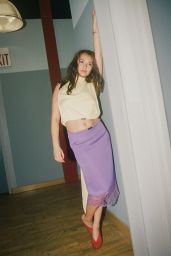
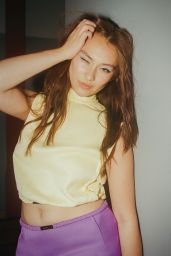
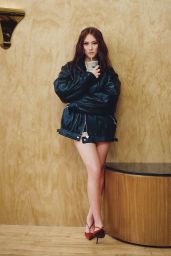
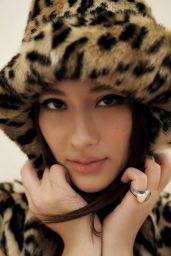
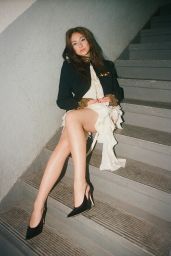
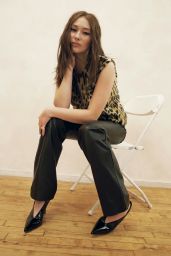
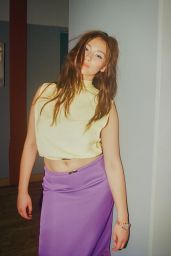

Tung’s first look is a masterclass in “I woke up like this” rebellion. A cropped, cream-colored knit top—deliberately slouchy, its high neck a nod to modesty that’s immediately undercut by the midriff-baring cut—pairs with a lavender wrap skirt. The skirt’s frayed hem isn’t just distressed; it’s a frayed edge of defiance, the kind of detail that whispers (or shouts), “I know the rules—and I’m rewriting them.” The silhouette is loose, almost sloppy, but the color palette—soft cream, dusty lavender—keeps it from veering into chaos. It’s the sartorial equivalent of a shrug: effortless, but loaded with intent.
In the second frame, Tung kneels in a chunky, ice-blue crochet cardigan that swallows her frame, its oversized sleeves pooling around her like a security blanket for the apocalypse. The cardigan’s texture is everything—thick, tactile, the kind of piece that begs to be touched. Paired with gray leggings and those same killer red stilettos (more on those later), the look toggles between cozy and confrontational. It’s as if Tung raided a grandma’s knitting basket and a punk’s shoe closet, then dared you to call it a mismatch.
Camila Mendes channels soft rebellion in Anthropologie’s Fall 2025 campaign—think cottagecore with a twist, latex with roses, and a wardrobe that whispers in italics.
Camila Mendes has always walked the line between girl-next-door charm and high-fashion bite. But in Anthropologie’s Fall 2025 collection, she doesn’t walk—she glides, she leans, she lingers. Shot across a series of intimate, light-drenched vignettes, the campaign feels like a love letter to texture, contrast, and the quiet drama of transitional dressing.
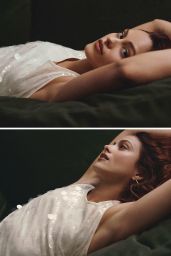
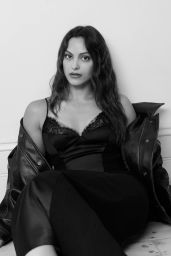
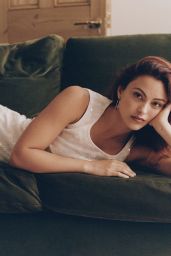
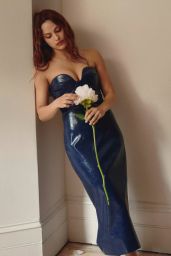
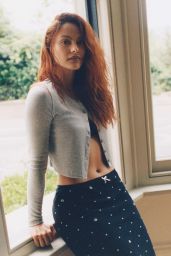
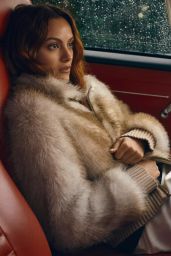
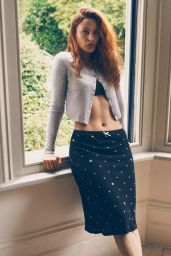
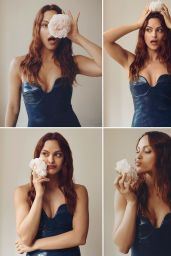
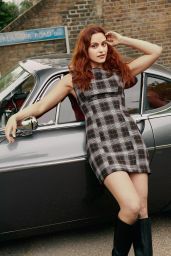
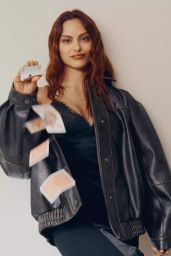
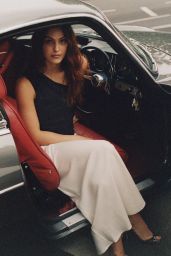
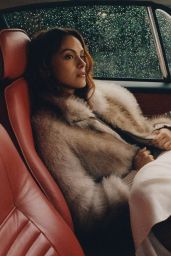
The collection unfolds like a mood board curated by a romantic with a dark side. In one frame, Mendes wears a cropped light gray cardigan layered over a black top and a black skirt dotted with white specks—like a starry night rendered in cotton. The silhouette is relaxed but intentional, with the cardigan’s soft knit playing against the skirt’s structured swing. Another look features a strapless, midnight-blue dress in glossy latex or leather, cut to mid-calf with a sweetheart neckline that sculpts the bodice like armor. It’s a study in tension: soft versus slick, domestic versus defiant.
And then there’s the brown cut-out dress—held together by black bow-like fasteners, paired with knee-high boots and framed by blooming roses. It’s giving “Jane Austen meets Rick Owens,” and somehow, it works.
Accessories are minimal, letting the garments speak. The boots are bold, the flower (a long-stemmed white bloom) is delicate, and the settings—whether a sunlit window or a checkered-tile stoop—feel curated but not contrived. Mendes’ poses are thoughtful, almost cinematic: one hand grazing her hair, another clutching a flower like a secret. The lighting shifts from soft indoor glow to crisp outdoor contrast, echoing the duality of the collection itself.
